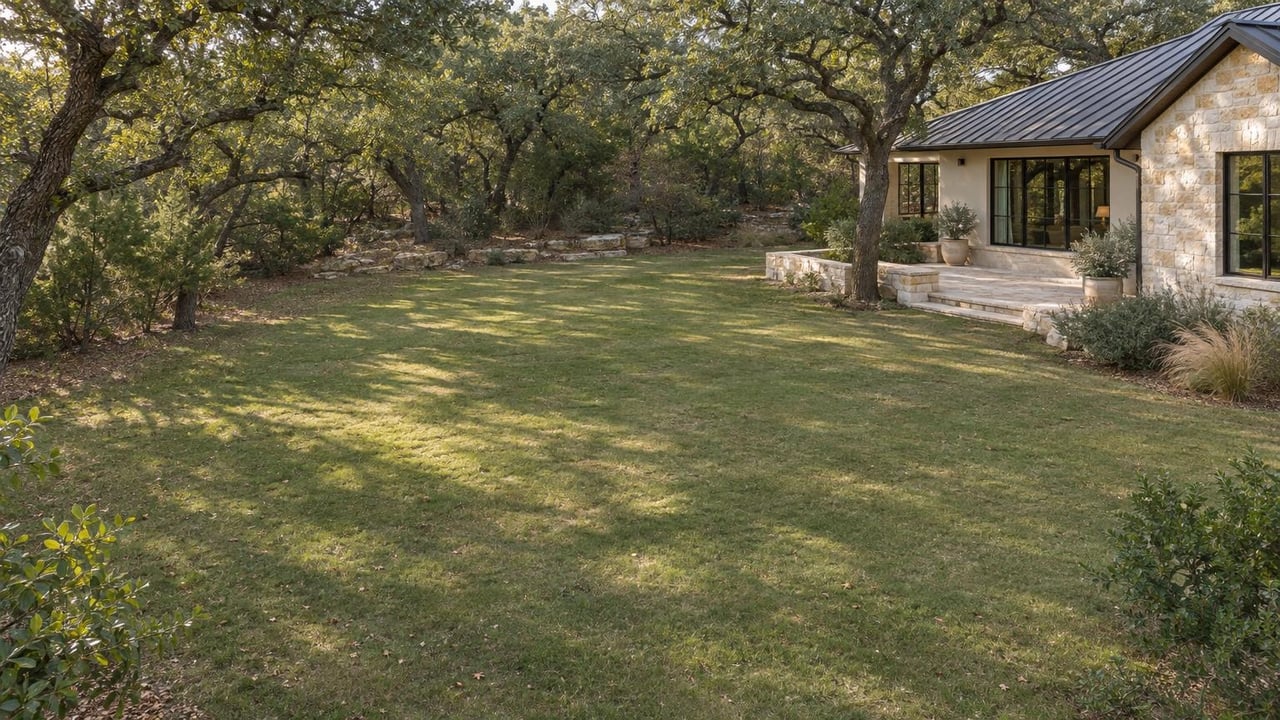
Most homes in West Lake Hills send their wastewater into the ground on their own lot, and city planning documents expect that to continue. In a May 2024 letter to the Austin City Council, the City of West Lake Hills wrote that "the majority of West Lake Hills residents have septic and will continue to do so", citing the community's character and the cost of extending lines through a low-density city.
In March 2026 the city laid out a 30-year wastewater timetable, and even the neighborhoods first in line for conversion sit in a 5 to 15 year window. So the septic system on a West Lake Hills lot belongs to the house for as long as most buyers will own it. It deserves the same scrutiny before an offer as the roof, the foundation and the trees.
A city that planned around septic
West Lake Hills did not end up on septic by accident. The city's 2014 Master Plan says sewage disposal is handled "primarily by private on-site sewage disposal/wastewater treatment systems," and notes that the City of Austin has long provided centralized service to selected commercial, governmental and residential sites.
The same document singles out the hilly area north of Bee Cave Road and northwest of Westlake Drive as the place where on-site systems will remain the main method "for the foreseeable future." It explains why: rugged terrain and rocky soil would make a gravity sewer very expensive, possibly cost prohibitive, and the plan states that centralized capacity "is not intended to encourage denser development."
The plan is more than a decade old, but the 2024 letter shows the reasoning still held ten years later. The hilly ground that defines much of the city is the same ground that makes a sewer main hard to build. Our West Lake Hills neighborhood page covers the setting. For a buyer, the practical point is that the land and the septic system come as one package.
Where the sewer does run, and why it stops
West Lake Hills operates its own wastewater collection system, and that system empties into the City of Austin's. The 2024 letter said the Bee Cave Road corridor, which still has commercial buildings on septic, is "hindered by the contractual constraints imposed on the conveyance of flows from the city's collection system to the City of Austin's wastewater system."
Austin's side of the system explains why those constraints exist. In its November 2024 staff report on the Barton Creek Interceptor, Austin Water said flow monitoring showed the Bee Cave Lift Station and the Skunk Hollow Interceptor "are at or near capacity." The report also said new capacity, such as the proposed Thousand Oaks Interceptor, would be needed to serve growth or redevelopment upstream of that lift station.
That proposal has been around a long time. The same report traces the Thousand Oaks Interceptor to a 1996 relief study and a 1997 consensus group. On March 26, 2026, the Austin City Council took it up again and approved on consent an engineering contract of up to $4 million with CAS Consulting and Services. According to the Austin Water recommendation, the project covers about 7,500 feet of new line from the Bee Cave Lift Station to the Barton Creek Interceptor, upstream of Barton Springs Pool.
That 2026 contract pays for engineering, not construction. A second, larger concept is on paper as well. Austin Water's November 2024 memo estimated a conceptual MoPac Interceptor at about $60 million and about 10 years from planning through construction. Community Impact reported in May 2025 that the MoPac line had not yet been designed.
Together, these documents show that sewer expansion in West Lake Hills depends on pipe several miles downstream, in another city, that has been planned in stages for three decades.
The city's own 30-year timetable
West Lake Hills spent early 2026 putting numbers on that dependence. At its March 25, 2026 meeting, the City Council took up a wastewater capacity report prepared by City Administrator Trey Fletcher. The report said consultant HR Green had modeled the city's collection system and its discharge points into Austin's system. It also said staff would send Austin 30-year wastewater projections, in five-year intervals, by the end of March.
The priorities in that report set the timeline a buyer should plan around:
- Near term, 0 to 5 years: maximize capacity to serve unmet needs within the existing service areas.
- Mid term, 5 to 15 years: secure capacity for the Sanderling, Capital of Texas, Hull Circle and Redbud wastewater service areas, including conversions from septic to conventional wastewater.
- Long term, 15 to 30 years: secure capacity for the remaining service areas along Bee Cave Road and Loop 360, and consider serving residential areas beyond the defined service areas "as development activity occurs and existing septic (OSSF) systems age out."
The report also said city staff "frequently" get requests from owners who want to switch from septic to conventional service, some from outside the defined service areas. Those owners are asking for something the city's own schedule places at least five years out, and for most streets later than that.
The city does spend on the wastewater system it already runs. Community Impact reported that the City Council approved its fiscal year 2026-27 budget on Sept. 9, including $3.19 million for wastewater maintenance and operations.
What the drain field decides on a given lot
The March report also says aging and expanded septic systems create tension among city goals, and it lists what competes for room on a site: "drain fields, tree preservation and protection, irregular lot conditions and steep slopes," along with water quality and stormwater management.
That list describes most West Lake Hills lots. On a sloped, wooded acre, the flat, open ground a pool, guest house or wing addition would need may be the same ground the drain field uses or would need if the system were enlarged. A buyer planning a significant renovation will learn more by locating the tank and drain field on a site plan before making an offer than from almost anything else in the listing packet.
The first questions to ask about any West Lake Hills listing are practical ones. Is the system a conventional tank or an aerobic unit? When was it last pumped, and who services it? Does the lot sit within one of the city's defined wastewater service areas, or on one of the streets the 2014 plan expected to stay on septic? The answers shape what the house can become, so they belong in the price conversation.
What a septic check costs this year
The cost of a septic inspection is small next to West Lake Hills prices. Mac Septic, an Austin-area septic service, lists these prices on its 2026 Austin price sheet:
- $950 for a real-estate package that combines a pump-out with an inspection letter.
- $350 for the letter alone if the tank was pumped in the past 12 months.
- $725 for a standard pump-out of a tank up to 1,250 gallons.
- $125 per visit for an aerobic maintenance contract with three visits a year.
- $6,000 to $10,000 for full drainfield replacement.
Those are one company's posted rates, not an area average, and the replacement range covers the drain field only.
For context on upkeep, the Texas Commission on Environmental Quality's maintenance guidance recommends pumping conventional tanks every three to five years.
These figures are general information, not legal, financial or engineering advice. Confirm the specifics for any property with a licensed septic professional and the agency that permits that system.
A short FAQ
Is sewer service coming to my part of West Lake Hills? The city's March 2026 wastewater report names the Sanderling, Capital of Texas, Hull Circle and Redbud service areas as mid-term priorities, 5 to 15 years out. It puts the remaining Bee Cave Road and Loop 360 areas, and any residential expansion beyond the defined service areas, in the 15 to 30 year range.
Why does a project in Barton Hills affect West Lake Hills? West Lake Hills' collected wastewater flows into Austin's system through infrastructure that Austin Water describes as at or near capacity, including the Bee Cave Lift Station. Added capacity there, such as the Thousand Oaks Interceptor now in engineering, comes before broader service upstream.
Is septic a reason to look elsewhere? The city's planning documents treat septic as the long-term arrangement for much of West Lake Hills' hilly terrain. Nearby Rollingwood is in a similar position: Community Impact reported that septic use is prevalent in both cities.
If you are weighing a West Lake Hills home, The Drewett Group can help you ask the right questions about the septic system, the drain field and your plans for the lot before you write an offer. Request Access to Private Listings, and we will start with the homes on your list.