Buying on Lake Austin can feel like the ultimate Austin move, but lakefront real estate comes with questions you do not face in a typical home search. You may be thinking about the view, the dock, and weekends on the water, while also wondering what the lot actually allows and what rules apply after closing. This guide will help you understand the details that matter most before you buy on Lake Austin, so you can move forward with more clarity and fewer surprises. Let’s dive in.
Why Lake Austin Buying Is Different
Lake Austin is not just a scenic backdrop. It is part of the Highland Lakes system and also part of Austin’s water supply, which gives it a unique mix of recreational use, shoreline regulation, and public oversight.
LCRA says Lake Austin generally operates within about a one-foot range, but it can rise above normal during floods. The City of Austin defines the normal pool at 492.8 feet above mean sea level. For you as a buyer, that means water level expectations should stay realistic, especially if you are evaluating shoreline improvements, dock access, or how the lot functions during changing conditions.
Another key difference is shoreline access. Texas Parks and Wildlife notes that almost all Lake Austin shoreline is privately owned, though there are still several public ramps and parks. That matters because owning near the lake is not the same as owning usable waterfront, and owning waterfront is not the same as having the exact kind of lake access you want.
Start With Jurisdiction First
Before you fall in love with a lot, confirm exactly where it sits from a jurisdiction standpoint. Austin rules can apply differently depending on whether a property is within full-purpose city limits, limited-purpose city limits, or the ETJ.
That one detail can affect site plans, subdivision rules, zoning, and permitting. In practical terms, two homes that look similar on the water may not follow the same approval path for improvements, maintenance, or future changes.
This is one of the first reasons Lake Austin purchases often require more upfront review than a standard single-family home purchase. If you skip this step, you may make assumptions about what can be built, modified, or rebuilt that do not hold up later.
Understand the Buildable Envelope
A Lake Austin lot may look generous on paper, but the usable building area can be much smaller than expected. In the Lake Austin district, shoreline setbacks are generally 75 feet, or 25 feet on certain older platted lots or legal tracts.
Within that shoreline setback, structures are generally prohibited except for limited items such as docks, bulkheads, retaining walls, non-mechanized pedestrian access, and on-site sewage facilities. That means the part of the property closest to the water may not be as flexible as buyers expect.
Impervious-cover limits can also reduce what is practical to build. The code uses lot width and slope-based standards, so steep sites and irregular lot shapes can narrow the building envelope quickly. This is one reason many Lake Austin homes are highly custom and site-specific.
Do Not Assume a Property Is Dockable
For many buyers, the dock is the lifestyle feature. But on Lake Austin, dockability should always be treated as a property-specific question.
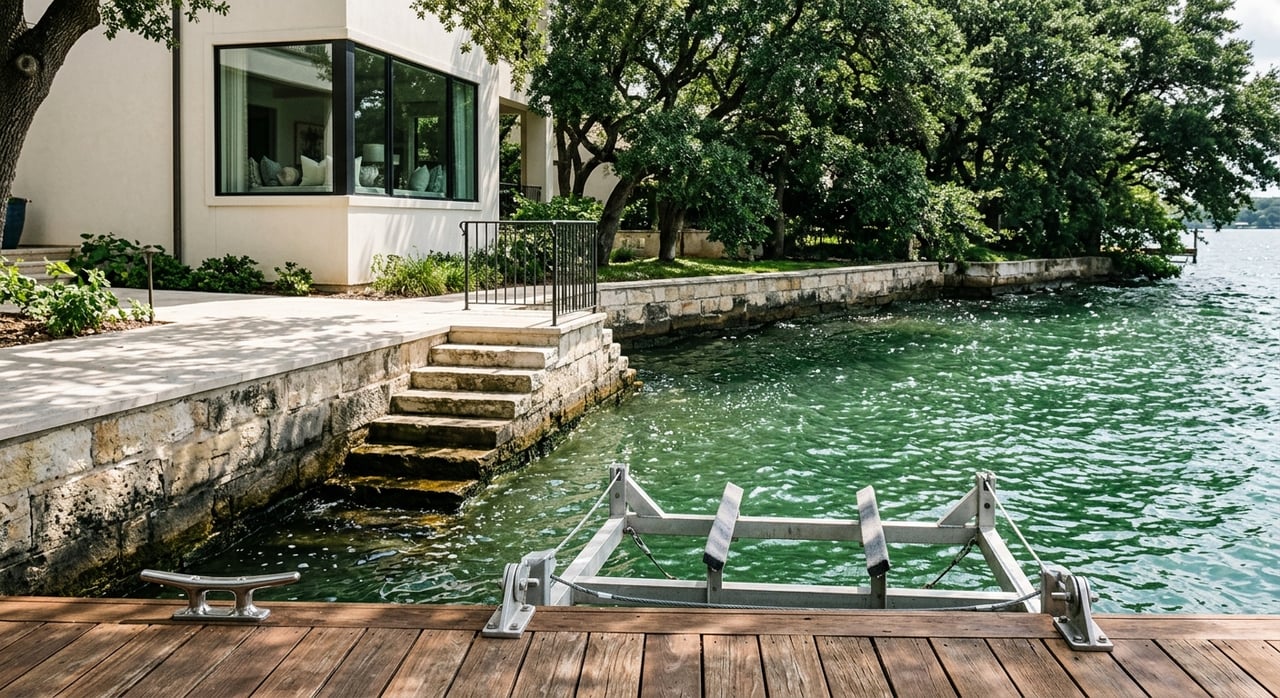
Within Austin jurisdiction, a site plan or site-plan exemption is required before building a boat dock, bulkhead, shoreline modification, or shoreline access structure. After construction, docks also require registration and proper addressing, and that registration does not replace permitting.
Current city rules also place limits on dock size and use. A Lake Austin dock is generally capped at 30 feet from the shoreline, with width and footprint limits, and enclosed living space is not allowed on the dock. For a typical residential dock, the ordinance also limits the number of motorboats stored over water.
LCRA notes that not every shoreline segment is suitable for a dock. Very shallow, narrow, rocky, or hazardous areas may not work, and floating habitable structures are prohibited on the Highland Lakes. So if a dock is central to your decision, verify whether the existing setup is permitted, whether it fits your intended use, and whether future repair or replacement is realistic.
Look Beyond the View to Water Use
A beautiful stretch of shoreline does not automatically mean it fits the way you want to use the lake. On Lake Austin, nearby navigation conditions and control zones matter just as much as the view from the patio.
The city uses navigation control zones that can include no-wake, no-prop, no-swimming, and other special-use areas. The Austin Police Department Lake Patrol is the principal law-enforcement presence on the lake, and Lake Austin has no city curfew.
That combination can shape your day-to-day experience more than many buyers realize. If you plan to boat often, ask practical questions about cove depth, channel width, nearby traffic patterns, and whether the water immediately off the property matches your expectations for launching, storing, or maneuvering a boat.
Review HOA and Recorded Property Rights
Lakefront purchases often come with more paperwork than buyers expect. In many lake-area subdivisions, recorded restrictive covenants and POA documents can affect use, maintenance obligations, architectural controls, and assessments.
Texas law provides that dedicatory instruments are recorded in county real-property records and have no effect until filed. It also states that assessments can be collected only if filing rules are met. A resale certificate may reveal assessments, special assessments, and transfer restraints that matter to your decision.
You should also review recorded CC&Rs, plats, easements, and any shared-dock or access agreements before closing. On a lake property, these documents help answer basic questions about who controls what, who can use what, and what restrictions may follow you after purchase.
Verify Utilities and Site Conditions
Utility assumptions can create expensive surprises on waterfront property. Even though Austin Water draws drinking water from the Lower Colorado River through Lake Travis and Lake Austin, utility service can still vary by parcel.
The shoreline code also contemplates on-site sewage facilities in some setback areas. That makes sewer, septic, and utility-rights verification a property-specific task, not a box to check casually.
If you are buying for immediate use, future renovation, or long-term redevelopment, these details matter early. Utility availability, service type, and site constraints can all affect cost, timing, and what is feasible over time.
Follow a Smart Due Diligence Sequence
The strongest Lake Austin purchases usually start with a simple order of operations. First, confirm the exact jurisdiction. Next, identify the recorded rights that govern the shoreline and dock. Then, determine what can physically be built and maintained on the site.
That sequence helps you focus on the questions that actually shape value and usability. It also prevents you from spending time on design ideas or lifestyle assumptions before you know what the property legally and physically supports.
A practical specialist team often includes a civil engineer, surveyor, title professional, real-estate attorney, and dock or permitting consultant. Your real estate team should coordinate those moving parts, help translate the findings into plain language, and keep the option and inspection period focused on the issues that matter most.
What This Means for Buyers
The biggest trade-off with Lake Austin is also part of its appeal. You can get immediate water access and a uniquely urban lakefront lifestyle, but the best properties usually require more legal, engineering, and dock diligence than a typical home purchase.
That does not make Lake Austin harder in a bad way. It simply means the smartest buyers approach it with a more detailed checklist and the right guidance from the start.
If you are considering a Lake Austin property, having a local team that understands waterfront nuances, private inventory, and high-detail due diligence can make the process more efficient and more informed. To explore available opportunities and request thoughtful guidance, connect with The Drewett Group.
FAQs
What should you verify first before buying on Lake Austin?
- Confirm the property’s exact jurisdiction, then review recorded shoreline and dock rights, and then evaluate what can physically be built or maintained on the site.
Can every Lake Austin waterfront property have a dock?
- No. Dockability depends on the specific shoreline conditions, permitting requirements, and city and LCRA rules for that particular property.
Do Lake Austin docks require permits and registration?
- Yes. Within Austin jurisdiction, a site plan or site-plan exemption is required before certain shoreline structures are built, and completed docks also require registration and proper addressing.
Are there building limits near the shoreline on Lake Austin?
- Yes. Shoreline setbacks are generally 75 feet, or 25 feet on certain older platted lots or legal tracts, and structures within that area are generally limited to specific allowed improvements.
Why do lot shape and slope matter on Lake Austin properties?
- Lot width, slope, and impervious-cover rules can reduce the usable building area, which affects renovation plans, rebuild potential, and overall site flexibility.
What documents should you review before closing on a Lake Austin home?
- Review recorded CC&Rs, plats, easements, resale certificate information, and any shared-dock or access agreements so you understand restrictions, obligations, and use rights before closing.